 English
 Español

Latest News
Latest News
Latest News
Latest News
Latest News
Latest News
Latest News
Latest News
Latest News
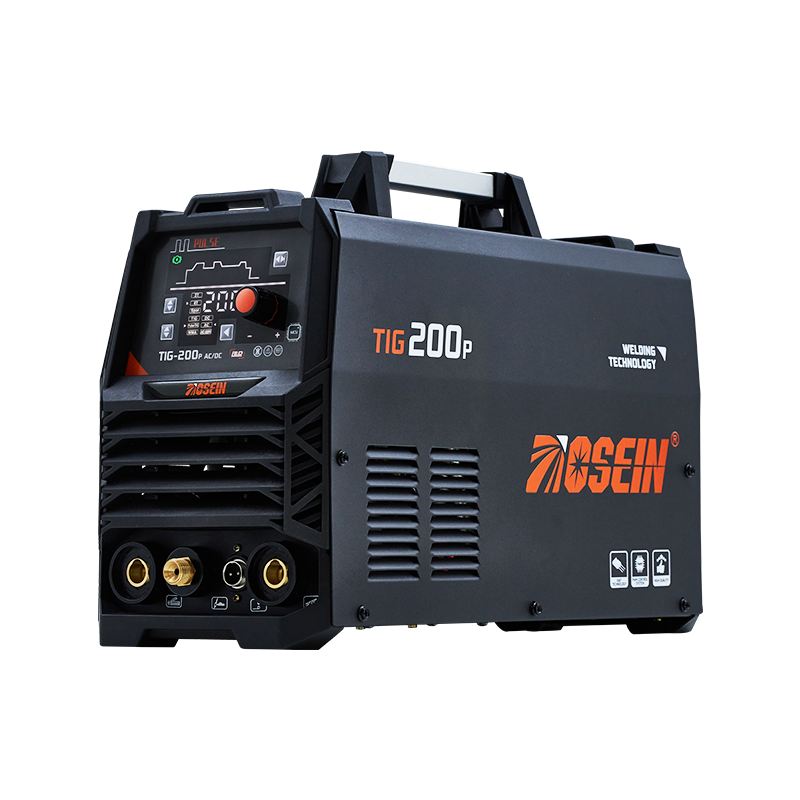
Aluminum welding can behave very differently from steel welding. Its oxide layer, high thermal conductivity, and rapid heat response require more control over the arc and weld pool. Modern AC DC pulse tig welder systems combine alternating current, direct current, and pulse control to give welders more ways to manage these variables.
Why Does Aluminum Need AC?
Aluminum develops an oxide layer that melts at a much higher temperature than the base metal. AC TIG welding addresses this difference through alternating electrode-negative and electrode-positive portions of the cycle. The EN portion contributes to penetration, while the EP portion provides cleaning action.
- EN portion: Directs more useful heat toward the workpiece and supports penetration.
- EP portion: Provides oxide-cleaning action around the weld area.
- AC balance: Adjusts the relationship between cleaning and penetration.
Modern machines allow the AC balance to be adjusted instead of relying on a fixed 50/50 polarity split. More EN time generally provides greater penetration with less cleaning, while more EP time increases cleaning action and also places greater thermal load on the tungsten.

Where Does Pulse Control Fit?
Pulse TIG alternates between peak current and background current at a chosen frequency. This creates a controlled heat cycle rather than maintaining the same current continuously. Such control can be useful with thin aluminum sections, smaller joints, and applications where excessive heat can quickly change the shape of the weld pool.
- Peak current: Provides the stronger part of each pulse and supports fusion.
- Background current: Maintains the arc while reducing instantaneous heat input.
- Pulse frequency: Determines how frequently the current changes between peak and background levels.
- Pulse width: Controls how much of each pulse cycle is spent at the peak-current level.
Some AC/DC TIG machines provide pulse frequency ranges extending from fractions of a hertz to hundreds of hertz. Such a range gives users considerably more control over the rhythm of the arc.
Does AC Frequency Change the Weld Pool?
AC frequency is another control worth understanding. It determines how frequently the polarity changes and can influence arc concentration and puddle behavior. Lower frequencies tend to produce a broader arc, while higher frequencies can create a tighter and more focused arc.
- Lower AC frequency: Can produce a broader arc and wider heat distribution.
- Medium frequency: Offers a practical range for general aluminum TIG work.
- Higher AC frequency: Can produce a narrower, more concentrated arc for detailed joints and thinner material.
Some commercial AC/DC TIG systems provide AC frequency ranges around 20–250 Hz, while pulse frequency may extend to 200 Hz or beyond. Actual useful settings depend on the machine design, material thickness, joint configuration, tungsten size, and filler material.
How Do Balance and Pulse Work Together?
AC balance and pulse frequency control different aspects of the welding cycle, so they should not be treated as interchangeable settings. Balance manages the relationship between cleaning and penetration during AC operation. Pulse controls the transition between peak and background current.
- Surface condition: Oxidation level can influence the amount of cleaning action required.
- Material thickness: Thin aluminum generally benefits from careful heat management.
- Joint design: Narrow joints may respond differently from wide fillet welds.
- Arc concentration: AC frequency can change the character and focus of the arc.
That combination gives an AC DC pulse tig welder more adjustment possibilities than a basic AC TIG unit. The benefit comes from matching each control to a specific welding condition rather than increasing every setting at the same time.
Which Specifications Matter Before Purchase?
Feature lists can look similar across different machines, yet the actual adjustment ranges may vary substantially. A closer look at the specification sheet can reveal how much control the machine really provides.
- TIG current range: Check both the minimum and maximum output.
- AC balance range: Review the available cleaning and penetration adjustment.
- AC frequency range: Higher available frequency can provide additional arc-focus adjustment.
- Pulse frequency range: Wider adjustment supports different pulse speeds and welding styles.
- Duty cycle: Check rated output at the stated ambient temperature.
- HF start: High-frequency arc starting can provide non-contact ignition, which is useful for TIG work.
Does More Control Make Aluminum Easier?
More control can make aluminum TIG welding easier to adapt, but the controls still require correct adjustment. AC handles the oxide-cleaning requirement, AC balance helps manage cleaning versus penetration, AC frequency changes arc concentration, and pulse settings provide another way to regulate the heat cycle.
That combination becomes particularly useful across thin sheet, fabricated aluminum components, repair work, and joints that require tighter control over the weld pool. Rather than judging an AC/DC TIG machine by its amperage rating alone, examine its balance, frequency, pulse, arc-start, and duty-cycle specifications. Those details provide a clearer picture of how precisely the machine can respond to different aluminum welding conditions.