 English
 Español

Latest News
Latest News
Latest News
Latest News
Latest News
Latest News
Latest News
Latest News
Latest News
Weld acceptance requirements can vary considerably between aluminum fabrication projects. A component used for a decorative enclosure may be judged mainly by its appearance and dimensional accuracy, while a structural assembly may require documented welding procedures, qualified personnel, and additional inspection. At OSEIN, we understand that purchasing welding equipment involves more than comparing rated amperage or checking the machine's appearance. Buyers also need to determine whether the equipment can support the technical requirements specified for their intended applications.
A tig machine for aluminum can support different fabrication tasks, but meeting project acceptance standards depends on the relationship between equipment capability, material properties, welding procedures, operator skills, and inspection requirements. Our approach is to help customers assess these factors before making an equipment decision.
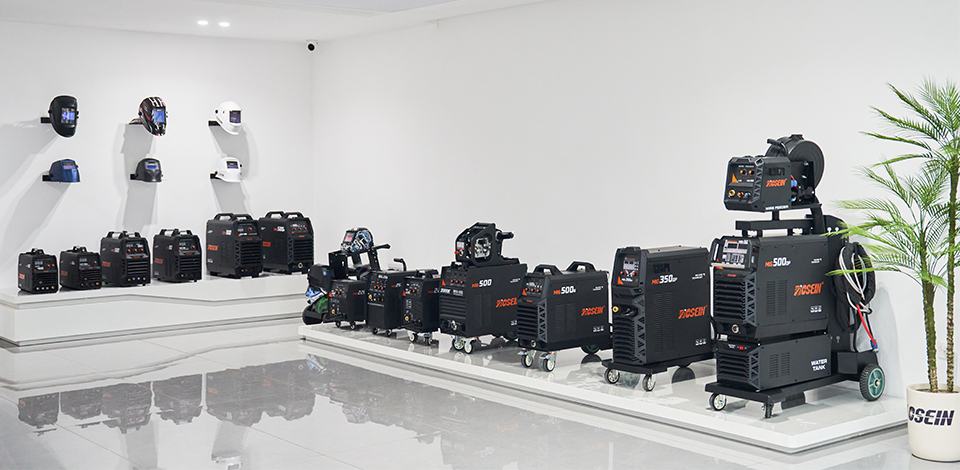
1. Identify the Acceptance Standards Before Purchasing Equipment
Different industries apply different requirements to aluminum welds. The acceptance criteria for a custom aluminum enclosure may differ from those governing a load-bearing frame or an industrial component. Buyers should identify the applicable requirements before deciding which welding machine configuration to purchase.
Review the project documentation
- Applicable welding codes: Confirm whether the contract specifies AWS D1.2/D1.2M for structural aluminum welding or another industry-specific standard.
- Drawing requirements: Check joint dimensions, weld locations, specified weld sizes, and dimensional tolerances.
- Inspection requirements: Establish whether acceptance depends on visual inspection, dimensional measurement, or additional nondestructive testing.
- Documentation: Determine whether welding procedure specifications, qualification records, material certificates, or inspection reports are required.
AWS D1.2/D1.2M addresses welding requirements for structures made from aluminum structural alloys, subject to its stated scope and applicable contract provisions. The project specification remains important because it identifies which requirements apply to the actual assembly. We encourage buyers to share relevant technical documents with our team so equipment discussions can focus on practical project needs rather than assumptions.
2. Match the Machine's Output Range to Aluminum Thickness
Aluminum transfers heat rapidly, and its surface oxide can make arc initiation and puddle control challenging. A machine that provides sufficient current for a thick plate may not offer the fine adjustment required for a thin enclosure or precision component. Buyers should therefore examine both the available output range and the machine's control functions.
Evaluate current adjustment and arc control
- Thin aluminum sheets: Fine current adjustment helps operators manage the weld pool and reduce the risk of burn-through or excessive distortion.
- Medium-thickness sections: The required current depends on alloy, joint design, welding position, filler metal, and travel speed.
- Thicker workpieces: Buyers should verify the machine's rated output, duty cycle, and ability to maintain the specified welding conditions throughout the intended work period.
Consider a workshop fabricating aluminum panels around 1.5 mm thick alongside structural sections measuring 6 mm. These dimensions illustrate two different application demands, not universal thickness limits for a particular machine. The buyer should conduct welding trials using representative materials and joint configurations before confirming the equipment specification.
At OSEIN, we recommend evaluating the full working range rather than choosing a machine solely by its maximum current rating. Actual suitability must be confirmed against the manufacturer's technical data and the welding procedure required by the project.
3. Understand Why AC TIG Capability Matters
Alternating current is widely used for TIG welding aluminum because the alternating waveform can support oxide-cleaning action during the electrode-positive portion of the cycle while providing useful penetration during the electrode-negative portion. The balance between these portions affects cleaning behavior, heat distribution, and electrode loading.
Check AC balance and frequency controls
- AC balance: Adjustable balance allows the operator to change the relationship between cleaning action and penetration, subject to the machine's design and control range.
- AC frequency: Adjustable frequency can influence arc concentration and puddle control. The useful settings depend on the joint, material thickness, and operator technique.
- Pulse TIG: Where available, pulse settings alternate between higher and lower current levels. This can help manage heat input in selected applications, but it does not automatically guarantee an acceptable weld.
- Arc-start functions: Reliable starting behavior and appropriate current control help operators establish repeatable welding conditions.
Not every project requires every function. Buyers should compare available controls with the actual welding procedure instead of paying for features that will not be used. We also recommend confirming whether the selected model provides the required AC output and whether its operating instructions cover the intended aluminum applications.
4. Treat Duty Cycle and Power Supply as Acceptance-Related Factors
Rated current alone does not describe how a machine performs throughout a production shift. Duty cycle indicates the proportion of a defined period during which equipment can weld at a stated output under specified test conditions. A machine rated at 200 A with a 60% duty cycle, for example, is rated to weld for six minutes during a ten-minute test period at that stated output, with the remaining time reserved for cooling according to the rating conditions.
This example explains the rating rather than describing a particular OSEIN model. Buyers should check the actual specification plate and technical documentation for the equipment under consideration.
Confirm the operating environment
- Verify the available input voltage, phase arrangement, frequency, and required circuit capacity.
- Compare the duty-cycle rating with the expected welding current and work schedule.
- Check the recommended ambient operating conditions and ventilation requirements.
- Confirm compatibility with the intended torch, gas supply, electrode arrangement, and other required accessories.
Power interruptions, thermal shutdowns, or incompatible accessories can interrupt a qualified welding procedure. Confirming these details during procurement helps the workshop establish stable operating conditions before production begins.
5. Prepare a Welding Procedure That Supports Inspection
Equipment capability and weld acceptance are related, but they are not interchangeable. A technically capable TIG machine cannot independently certify a completed joint. Acceptance depends on the applicable code, approved procedures, workmanship, and inspection results.
Build a repeatable procedure
- Identify the base alloy: Determine the aluminum grade and material thickness before establishing welding parameters.
- Specify filler material: Confirm filler-metal compatibility with the base alloy and the mechanical or service requirements of the joint.
- Define preparation methods: Establish suitable cleaning, oxide removal, joint preparation, and fit-up practices.
- Record welding parameters: Document current, AC settings where applicable, shielding gas, travel speed, and other variables required by the procedure.
- Conduct representative trials: Use sample joints that reflect the production material, thickness, joint geometry, and welding position.
- Verify acceptance: Arrange the specified visual examinations, dimensional checks, and additional testing where required.
Depending on the application, inspection may examine surface cracking, weld profile, incomplete fusion, porosity, undercut, or dimensional deviations. Acceptance limits must come from the applicable standard, approved drawings, and contract documents rather than a general checklist. Additional testing may also be required by the project engineer.
6. Compare Equipment Against the Actual Project Requirements
Procurement teams can reduce uncertainty by using a structured comparison before placing an order. The following table outlines the information we recommend reviewing with an equipment supplier.
| Evaluation item | Information to confirm | Purpose |
| Material compatibility | Aluminum alloys, thickness range, joint types | Establish application suitability |
| Output performance | Current range, rated output, duty cycle | Match the working conditions |
| AC TIG functions | AC balance, frequency, pulse availability | Check process control requirements |
| Electrical conditions | Input voltage, phase, frequency, circuit capacity | Confirm installation compatibility |
| Accessories | Torch, cables, gas connections, consumables | Prepare a complete working configuration |
| Quality documentation | Technical data, operating instructions, applicable records | Support procurement review and equipment setup |
| Service arrangements | Warranty terms, technical assistance, spare-part availability | Plan for ongoing equipment support |
This comparison also helps buyers distinguish between an equipment specification and a project qualification requirement. A machine may satisfy the workshop's electrical and output needs while the welding procedure still requires separate approval or testing.
7. Work With OSEIN to Clarify Technical Requirements
At OSEIN, we view equipment selection as a technical discussion rather than a decision based on a single specification. Buyers can prepare a clearer request by providing the intended aluminum alloy, thickness range, joint drawings, required welding process, available power supply, and relevant acceptance documents.
Our team can use this information to discuss suitable equipment configurations, available functions, rated operating conditions, and accessory requirements. Where a project involves structural or safety-critical components, the buyer should also confirm procedure qualification, operator qualifications, and inspection arrangements with the responsible engineering or quality team.
We recommend requesting the applicable model datasheet and reviewing its actual ratings before confirming a purchase. Where necessary, representative welding trials can help establish whether the proposed setup supports the required process conditions. Final acceptance remains dependent on the project specification and the results of the prescribed inspection and testing.
Can an aluminum TIG welder meet different project acceptance standards? It can support a wide range of applications when its output, AC control functions, duty cycle, electrical requirements, and accessories match the intended work. However, no machine specification alone guarantees that every finished weld will pass inspection.
At OSEIN, we encourage buyers to connect equipment requirements with material specifications, documented welding procedures, and clearly defined acceptance criteria. A careful review before purchasing helps fabrication teams make informed equipment decisions and establish a more reliable path from sample welding to production. Contact our team through osein-welding.com to discuss your application and request technical information for the relevant welding equipment.