 English
 Español

Latest News
Latest News
Latest News
Latest News
Latest News
Latest News
Latest News
Latest News
Latest News
Traditional welding equipment can occupy considerable floor and bench space, especially around the power transformer and cooling structure. Modern inverter TIG welding machine designs take a different approach. High-frequency switching and semiconductor power control allow manufacturers to reduce the size of key power components while retaining useful welding output.
What Makes the Inverter Design Smaller?
The main difference comes from operating frequency. Traditional transformer welders work around mains frequency, requiring relatively large magnetic components. An inverter system first converts the input power into a higher-frequency electrical signal before passing it through a much smaller transformer.
IGBT technology plays an important role in this process. Technical documentation describes inverter TIG equipment using pulse-width modulation and IGBT technology to shift the working frequency upward, replacing bulky low-frequency transformer structures with smaller medium-frequency components.
- Higher switching frequency: Allows magnetic components to become smaller.
- IGBT power devices: Provide electronic switching and control within a compact power section.
- Reduced transformer size: Frees internal space for control electronics and cooling components.
- Digital control: Allows welding parameters to be adjusted electronically rather than through large mechanical components.
How Much Smaller Can a TIG Machine Become?
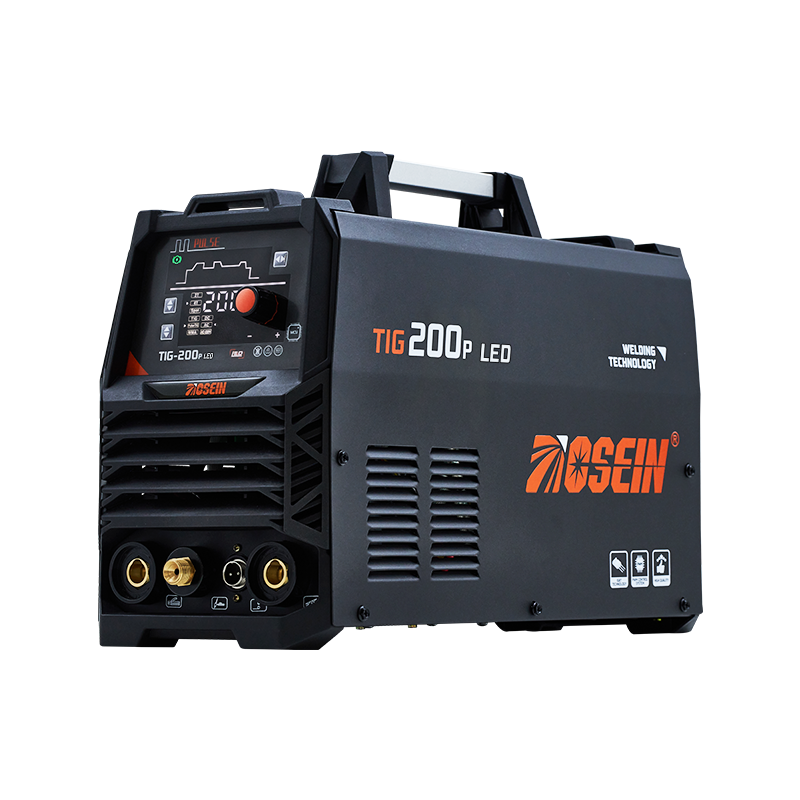
Actual dimensions vary by output class and configuration, but current inverter TIG products demonstrate how compact the format can be. One 160/200A DC TIG series measures approximately 440 × 175 × 340 mm and weighs 9 kg. Another 160/200A design measures about 394 × 154 × 293 mm with a weight of only 6.8 kg.
Such dimensions can change the layout of a workshop considerably. Equipment can fit beneath workbenches, beside fabrication tables, or inside mobile welding carts without requiring the footprint associated with large transformer-based units.
Does Smaller Mean Less Welding Capability?
Compact construction does not automatically mean limited output. The relationship between physical size and welding current has changed considerably with inverter technology. A current 200A inverter TIG design, for example, can provide a TIG adjustment range from 5–200A while maintaining a compact 440 × 175 × 340 mm enclosure.
- Current range: A low minimum current can support thin-material TIG work.
- Rated output: Maximum amperage should be evaluated together with its duty-cycle rating.
- Process options: TIG, pulse TIG, and MMA functions can be integrated into the same enclosure.
- Cooling system: Fan cooling and thermal protection help manage heat inside the compact cabinet.
Portability Changes Workshop Layout
Weight reduction affects more than transportation. A lighter machine can be repositioned around a fabrication area according to the workpiece rather than keeping the equipment permanently beside a fixed welding table.
- Bench work: Compact equipment can sit close to small precision projects.
- Repair work: A lightweight enclosure can be carried between different work areas.
- Mobile fabrication: Lower machine weight reduces the load on portable welding carts.
- Limited workshops: Smaller dimensions leave more room for workpieces, gas cylinders, and accessories.
Some inverter TIG machines weigh around 10 kg while still offering TIG, MMA, HF or lift-start options and remote-control compatibility.
What Happens to the Internal Layout?
Reducing the transformer size does not simply create an empty box. Modern machines use the available space for electronic control boards, cooling channels, protection systems, and digital interfaces.
Thermal management therefore becomes important. Compact equipment can use fan cooling together with overload, over-voltage, under-voltage, and thermal protection. These systems help protect electronic components during demanding welding conditions. Current compact TIG designs commonly include such protection features.
Compact AC/DC Models Take the Concept Further
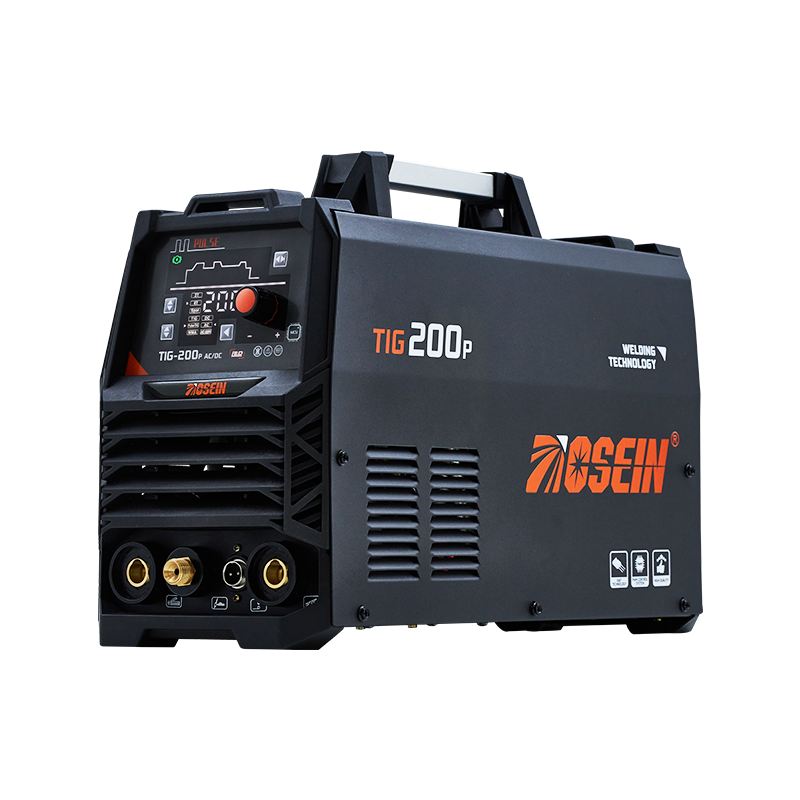
The size advantage also applies to machines offering more advanced TIG functions. AC/DC pulse models can combine AC frequency, AC balance, pulse settings, 2T/4T operation, digital displays, and foot-pedal control within a relatively compact enclosure. One current AC/DC pulse TIG model measures about 520 × 242 × 430 mm and weighs 16.5 kg.
Such equipment demonstrates that compact design is not limited to basic DC TIG. More sophisticated electronic controls can also be integrated into portable platforms.
Does a Smaller Setup Change the Buying Criteria?
Size should be evaluated alongside output, duty cycle, cooling, input power, and available TIG functions. A compact enclosure is useful only when its electrical and thermal design can support the intended welding workload.
- Check dimensions: Confirm that the machine fits the intended bench, cart, or storage area.
- Check weight: Lower weight can be valuable for mobile fabrication and repair work.
- Check duty cycle: Compare rated output with the duration of typical welding sessions.
- Check input requirements: Compact equipment still needs an electrical supply capable of supporting its rated output.
- Check cooling: Fan design and thermal protection matter inside a smaller enclosure.
Why Does Inverter Technology Matter to Workshop Space?
An inverter TIG welding machine changes the physical scale of a welding setup by replacing bulky low-frequency power components with high-frequency electronic conversion. IGBT switching, smaller transformers, digital controls, and compact cooling systems allow useful TIG output to fit into substantially smaller enclosures.
The result is more than a lighter machine. Workshop layouts can become more flexible, mobile welding setups become easier to arrange, and equipment storage requires less dedicated space. Physical size still needs to be considered alongside current output and duty cycle, but inverter technology has clearly changed the relationship between welding power and machine footprint.