 English
 Español

Latest News
Latest News
Latest News
Latest News
Latest News
Latest News
Latest News
Latest News
Latest News
Garage welding projects rarely look like factory production jobs. A home workshop may need to repair a metal cart, build a small frame, patch a bracket, modify a workbench, or fabricate a trailer component. Small MIG welders for home use are designed around this type of mixed workload, but their compact size also creates practical limits.
Thin Sheet Metal Is Their Natural Territory
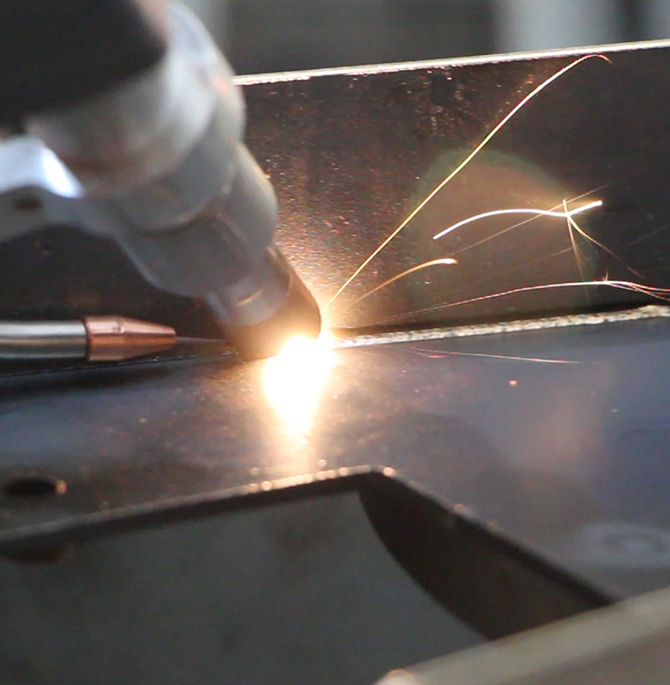
Light-gauge steel is among the easiest applications for compact MIG equipment. Lower amperage settings allow the operator to control heat while maintaining a manageable wire feed rate.
- Sheet-metal panels: Suitable for brackets, covers, small enclosures, and repair patches.
- Thin tubing: Useful for lightweight frames, stands, carts, and hobby structures.
- Small fixtures: Short welds on benches, racks, and workshop accessories fit the operating pattern of compact MIG machines.
Current 120V models commonly offer output around 30–140A. Some machines are rated for material ranging from approximately 24-gauge sheet up to 1/4-inch plate under specified conditions.
How Far Can the Amperage Go?
Amperage provides a useful starting point for understanding capacity, but it does not tell the complete story. A compact machine rated at 140A may handle considerably different material thicknesses depending on input voltage, wire diameter, joint design, travel speed, and duty cycle.
- Around 90A: Practical for lighter sheet-metal work and shorter welds.
- Around 120–140A: Gives additional room for brackets, tubing, frames, and moderate steel sections.
- 180–200A class: Provides greater capacity for thicker home-fabrication projects, particularly with 220V input.
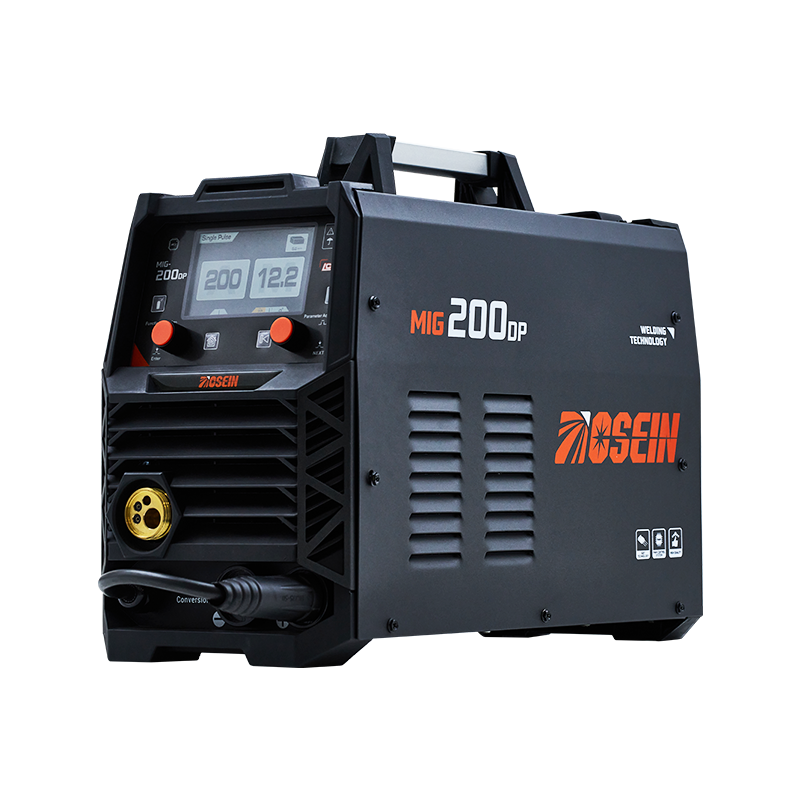
Some dual-voltage machines show a substantial difference between their 110V and 220V capabilities. One current specification, for example, lists MIG output up to 160A at 110V and 205A at 220V, with recommended MIG thickness reaching about 1/2 inch under its stated conditions.
Duty Cycle Sets the Pace
Home users sometimes focus heavily on maximum amperage and overlook duty cycle. This rating describes how long a machine can weld during a standard ten-minute period at a specified output.
- 20% duty cycle: More suited to short repair jobs, tacking, and intermittent welding.
- 30% duty cycle: Gives additional working time for brackets, frames, and repeated short welds.
- 60% duty cycle: Provides considerably more arc-on time during extended fabrication.
A current 140A home-oriented MIG machine lists a 30% duty cycle at 90A, while another 205A dual-voltage model lists 60% at 205A. Such figures show why two machines with similar maximum amperage can behave quite differently during longer jobs.
Solid Wire or Flux-Cored?
Wire choice changes the way a small MIG welder behaves. Solid wire normally works with shielding gas and can provide a cleaner process for indoor workshop welding. Flux-cored wire can operate without an external shielding gas supply, making it useful for certain repair and outdoor applications.
- Solid MIG wire: Suitable for controlled indoor fabrication with an appropriate shielding gas.
- Flux-cored wire: Useful where gas equipment is inconvenient or outdoor conditions make gas shielding difficult.
- Wire diameter: Common compact MIG machines may support sizes such as 0.023, 0.030, and 0.035 inch, depending on the feeder and setup.
Some current multi-process MIG systems support several wire types, including ER70S-6, E71T, stainless-steel wire, and aluminum alloys, with wire diameters extending from 0.6 mm to 1.1 mm.
Which Home Projects Fit Compact MIG Equipment?
The strongest match is usually a project involving moderate material thickness, relatively short welds, and frequent repositioning. Such conditions give the operator enough time to inspect the joint, adjust the workpiece, and continue without demanding continuous high-current operation.
- Workshop carts and storage racks
- Metal benches and small tables
- Garden gates and lightweight frames
- Automotive brackets and repair components
- Trailer accessories and small fabrication projects
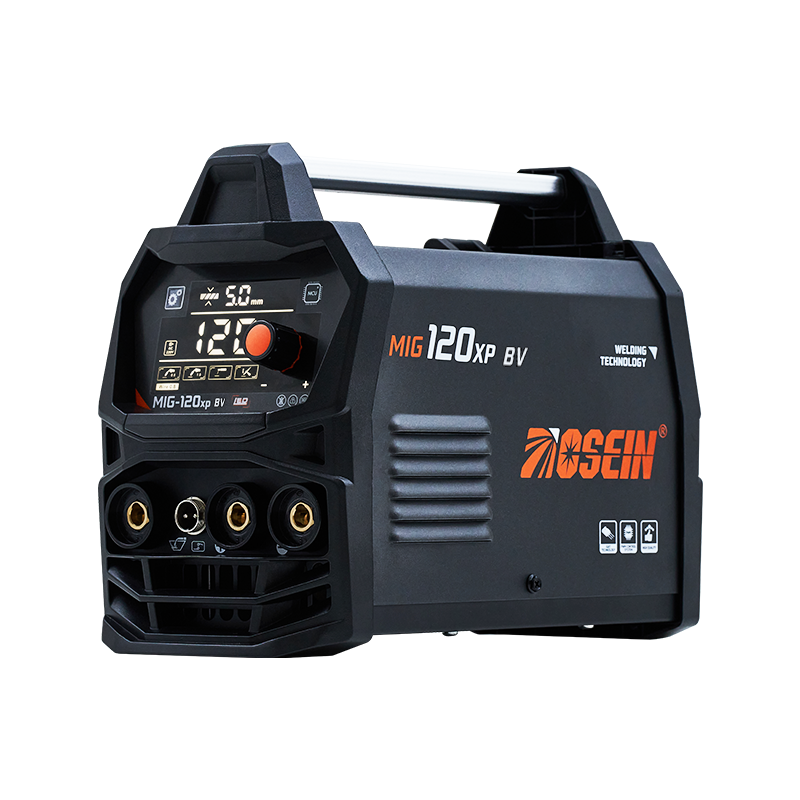
Current 120V models are marketed for home garages, brackets, frames, repairs, carts, benches, and similar light fabrication tasks, showing how compact MIG equipment has moved beyond simple hobby repairs.
Where Do Small MIG Welders Reach Their Limits?
Thick structural steel and long continuous welds can expose the limitations of compact equipment. Higher current requirements may exceed the output available from a 120V machine, while repeated high-current operation can also push the duty cycle.
- Heavy plate: Check recommended thickness rather than relying only on the maximum amperage.
- Long seams: Compare duty cycle at the current actually required for the project.
- Frequent fabrication: Consider a higher-output or dual-voltage machine for repeated heavy work.
- Aluminum: Verify spool-gun compatibility and aluminum wire support before planning this type of work.
Spool-gun compatibility can matter greatly for aluminum because the feeding characteristics of soft aluminum wire differ from standard steel wire. Equipment and gun ratings should also be matched to the intended current and duty cycle.
What Should Home Users Check?
Small MIG welders for home use can handle a surprisingly broad range of workshop projects, provided the material thickness and working pattern stay within the machine's rated capacity. Maximum amperage, input voltage, duty cycle, wire diameter, gas options, and recommended material thickness all deserve attention.
Compact 120V equipment makes sense for lighter garage work and short repair jobs. Dual-voltage models provide additional flexibility, especially where future projects may involve thicker steel. The real measure of capability is not machine size but how closely its specifications match the materials, joint types, and welding duration expected in the home workshop.