 English
 Español

Latest News
Latest News
Latest News
Latest News
Latest News
Latest News
Latest News
Latest News
Latest News
Arc stability is one of the key concerns during stick welding, especially for applications involving thick materials, long welding cycles, and demanding working environments. Many modern inverter welders highlight dual IGBT technology as a solution for smoother current control and more stable arc performance. However, a common question remains: does adding a second IGBT module actually create a more consistent welding arc, or is it simply a marketing feature?
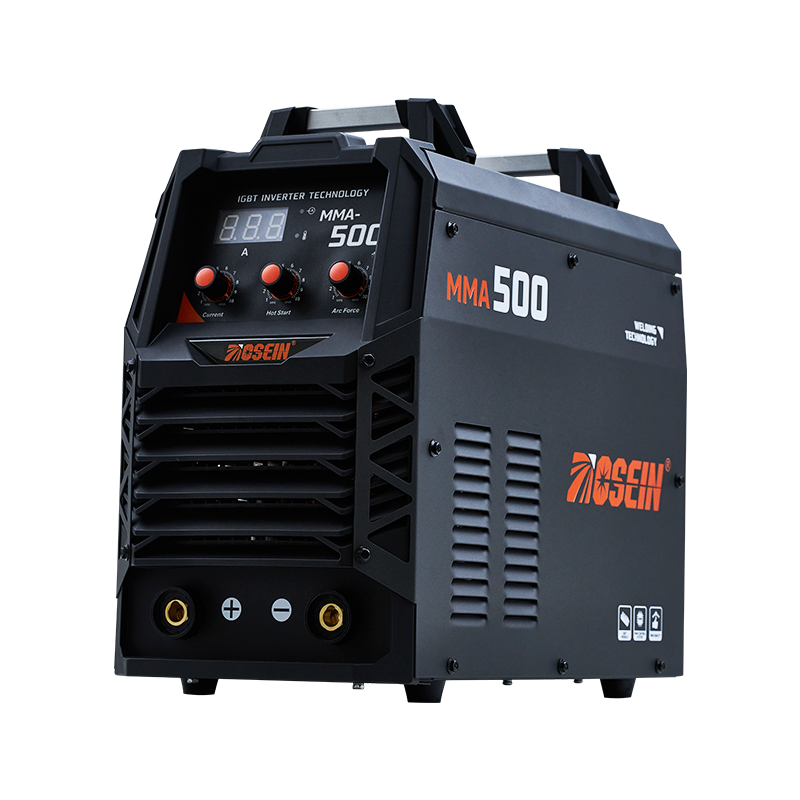
The answer depends on the overall inverter design. A dual-module structure can improve current handling capability, thermal distribution, and response speed, but the final welding performance also relies on control circuits, feedback systems, cooling design, and parameter adjustment. A properly engineered IGBT Dual Module Inverter MMA Welding Machine uses multiple power switching components to manage electrical loads more effectively rather than relying on a single device. Many industrial MMA systems combine dual IGBT structures with arc force adjustment, hot start functions, and closed-loop control to improve arc response.
How Dual IGBT Architecture Changes Power Management
IGBT, or Insulated Gate Bipolar Transistor, is a semiconductor component used in inverter welding machines to switch electrical energy at high frequency. The switching process controls how input power is converted into stable welding current.
A single IGBT design requires one group of switching components to handle the entire electrical load. A dual IGBT configuration divides this workload between two modules.
- Load distribution: two IGBT modules share current stress instead of concentrating it on one switching path.
- Thermal balance: heat generation is spread across multiple components.
- Dynamic response: the inverter can react faster to changes in arc conditions.
- Higher current capability: the system can support higher output ranges for industrial welding tasks.
This structure is particularly useful for high-current MMA applications where electrical stress increases during continuous welding. Some industrial inverter MMA machines use dual IGBT construction together with high-duty-cycle designs to maintain stable output under heavy loads.
Arc Stability Depends on More Than IGBT Quantity
Although dual IGBT modules provide hardware advantages, they are only one part of the welding control system. Arc consistency is created through cooperation between power components and intelligent regulation technology.
The welding arc changes constantly because of:
- Electrode melting behavior: the electrode length decreases throughout the welding process.
- Arc length variation: small hand movements change electrical resistance.
- Material conditions: surface contamination and thickness influence arc response.
- Power fluctuations: unstable input voltage affects output control.
Research on welding arc monitoring shows that arc stability is influenced by dynamic current behavior and waveform changes rather than a single electrical factor. Modern systems analyze current signals and use feedback control to maintain more predictable welding conditions.
Why Dual IGBT Systems Can Improve Heavy-Duty Welding
Stick welding on thicker steel often requires higher amperage and longer operation periods. Under these conditions, inverter components experience significant electrical and thermal stress.
A dual IGBT configuration offers several practical benefits:
- Reduced stress on individual switches: each module handles part of the total current load.
- Better heat management: distributed heat generation helps reduce localized temperature rise.
- More stable high-current output: the inverter has greater capacity during demanding welding cycles.
For example, industrial MMA models using dual IGBT modules often combine high output current with adjustable arc force and hot start features to improve electrode ignition and arc response.
Arc Force Control Works Together with Dual IGBT Technology
Many operators assume dual IGBT modules directly create a smoother arc. Actually, the IGBT structure provides the electrical foundation, while arc control functions determine how the machine reacts during welding.
Important control functions include:
- Arc force adjustment: increases current response during short arc conditions to reduce electrode sticking.
- Hot start function: provides additional current during arc ignition.
- Anti-stick protection: lowers output when the electrode remains attached to the workpiece.
- Closed-loop feedback: monitors output changes and adjusts current quickly.
Industrial MMA machines commonly integrate these features with IGBT inverter systems because stable welding requires both fast power switching and intelligent output management.
Single IGBT vs Dual IGBT: Where Is the Difference Noticeable?
The difference between single and dual IGBT systems is easier to observe under demanding conditions rather than basic welding tasks.
- Low-current welding: both designs may provide acceptable arc performance because electrical demand is limited.
- High-current welding: dual IGBT systems have more capacity to handle increased electrical stress.
- Long duty cycles: distributed heat generation can help maintain output stability.
- Industrial applications: dual modules are more commonly used where reliability under heavy loads is important.
A hobby user performing occasional repairs may notice limited differences, while fabrication workshops and construction teams using high-amperage welding processes are more likely to benefit from the additional power management capability.
Technical Parameters Commonly Found in Dual IGBT MMA Welders
Industrial inverter MMA equipment using dual IGBT structures often includes specifications such as:
- Output current: approximately 200A–600A depending on machine class.
- Input voltage: commonly available in 220V, 380V, or three-phase configurations.
- Switching frequency: typically within the high-frequency inverter range.
- Protection functions: overload, overheating, short circuit, and voltage compensation systems.
- Electrode compatibility: supports different stick electrode sizes according to output capacity.
Does Dual IGBT Guarantee Better Welding Results?
Dual IGBT modules provide a stronger electrical platform, but they cannot independently guarantee superior weld quality. Poor parameter settings, unsuitable electrodes, incorrect welding speed, or unstable input power can still affect the final result.
The real advantage appears when the dual-module design is combined with accurate current feedback, efficient cooling, and responsive arc control technology.
Dual IGBT Is a Performance Foundation, Not the Entire Solution
A dual IGBT structure can improve arc consistency by reducing component stress, supporting faster current response, and allowing more stable operation under heavy welding conditions. However, the performance of an IGBT Dual Module Inverter MMA Welding Machine depends on the complete electrical design rather than the number of IGBT modules alone.
For industrial stick welding applications that require strong arc response, long operating periods, and reliable output, dual IGBT technology offers meaningful advantages. The best results come from combining robust power components with intelligent control systems, proper cooling, and correct welding parameters.