 English
 Español

Latest News
Latest News
Latest News
Latest News
Latest News
Latest News
Latest News
Latest News
Latest News
In many production environments, welding equipment is not only used to join materials but also to keep output behavior steady during repeated operation. A 3 PCB High Duty Cycle Electric Welding Machine is designed around this kind of requirement, where internal functions are separated into different circuit layers rather than being concentrated on a single board.
This separation changes how power and signals move inside the system. Instead of one shared pathway carrying all loads, different sections handle specific tasks. Over time, this structure can influence how stable the operation feels during long working cycles, especially when the machine is exposed to continuous switching.
What is a 3 PCB High Duty Cycle Electric Welding Machine used for in modern manufacturing
In real production lines, this type of welding machine is usually found in repetitive assembly work where metal parts need consistent joining behavior. It is not tied to a single process, which allows it to appear across different manufacturing setups.
Typical use cases include conductive strip connection, structural metal joining, and small component assembly where repeatability is more important than process variation.
In practice, operators often adjust settings depending on material behavior rather than changing the equipment itself. This makes it easier to fit into mixed production environments where requirements shift between batches.
| Application area | Typical task behavior | Adjustment focus |
|---|---|---|
| Conductive strips | Repeated joining cycles | Energy timing control |
| Metal structures | Stable joint formation | Current behavior tuning |
| Small components | Precision contact work | Response sensitivity |
How does a 3 PCB architecture improve stability during high duty cycle welding operation
Inside a multi board structure, function separation plays a central role. One section deals with control signals, another manages power switching, and a third focuses on monitoring working conditions.
During repeated welding cycles, high current paths and sensitive signal lines are kept physically apart. This reduces the chance that switching activity will interfere with control behavior. In real operation, this is often reflected in more consistent output during extended runs.
Two practical effects are usually observed:
- Signal sections are less affected by high current switching noise
- Load distribution prevents a single circuit area from being constantly stressed
Another detail is how the system reacts when load conditions shift. Since each board has a defined role, adjustments are handled in smaller steps rather than through one overloaded control path. This gives the operation a more controlled rhythm during continuous use.
How PCB layout design affects heat management in electric welding machines
Heat inside welding equipment is closely related to how components are positioned on the circuit boards. When high power components are placed near control sections, heat transfer can become uneven and may influence signal behavior.
In a 3 PCB High Duty Cycle Electric Welding Machine, layout design usually separates energy-intensive zones from signal processing areas. This does not remove heat, but changes how it spreads across the system.
| Area type | Heat tendency | Functional impact |
|---|---|---|
| Power switching zone | Heat concentrates during operation | Direct energy output area |
| Control zone | Lower thermal exposure | Signal processing stability |
| Monitoring zone | Moderate fluctuation | Feedback consistency |
Airflow direction inside the enclosure also plays a role. In many setups, heat tends to appear near switching components first, then slowly moves outward depending on internal spacing.
Instead of compressing all circuits into one dense layout, distributing them across multiple boards helps reduce thermal concentration during longer operation periods.
Which materials can be processed with a 3 PCB High Duty Cycle Electric Welding Machine
Different conductive materials respond differently to electrical energy input. This type of welding machine is generally used for materials that require controlled and repeatable energy delivery rather than sudden output changes.
Common materials include copper based conductors, aluminum parts, nickel coated strips, and stainless steel components. Each behaves differently during welding, especially when energy timing is adjusted.
For example, copper tends to conduct energy smoothly but requires stable control to avoid uneven bonding. Aluminum reacts more quickly to changes and usually needs more careful adjustment during operation.
Material handling in practice is less about changing hardware and more about adapting operating behavior. Operators usually focus on:
- Adjusting energy timing based on thickness and surface condition
- Modifying response sensitivity depending on material conductivity
This allows the same 3 PCB High Duty Cycle Electric Welding Machine to be used across different production tasks without structural changes.
How does feedback control system support consistent welding performance in PCB based welding machines
In practical operation, welding behavior is not only determined by power output but also by how the system observes and adjusts its own state during each cycle. A feedback control mechanism is used to monitor working conditions and make small corrections while the process is running.
Instead of treating each weld as an isolated event, the system continuously reads signals such as current changes and response timing. These signals are then used to adjust output behavior in a controlled manner, which helps reduce variation between repeated operations.
In many cases, feedback processing is handled through a distributed circuit structure, which is one of the reasons a 3 PCB High Duty Cycle Electric Welding Machine is often associated with more stable adjustment behavior under continuous load.
What safety and protection functions are commonly integrated into 3 PCB welding machine systems
Safety functions in welding equipment are generally designed to respond when operating conditions move outside expected ranges. These functions are not limited to shutting the system down but often include layered responses depending on the situation.
Common protection behaviors include:
- Limiting output when abnormal current is detected
- Reducing activity when internal temperature begins to rise
Interrupting operation when short circuit conditions appear
These functions are typically spread across different circuit sections rather than handled by a single point of control. This distribution helps ensure that protection logic still works even if one part of the system is under stress.
In some designs, protection logic is also linked with monitoring circuits that track operational changes over time, allowing the system to react gradually rather than abruptly in certain conditions.
How to optimize operation settings for longer service life of a 3 PCB High Duty Cycle Electric Welding Machine
Operational settings play a direct role in how internal components behave over extended use. When parameters are not aligned with material conditions or working frequency, stress can accumulate in specific areas of the system.
Adjustment usually focuses on balancing energy delivery with thermal behavior rather than maximizing output. In many real applications, small changes in timing or intensity are enough to influence how evenly the system operates.
| Adjustment area | Practical consideration | Effect on operation |
|---|---|---|
| Energy timing | Matching material response | More even welding behavior |
| Cycle frequency | Avoiding continuous stress | Reduced thermal buildup |
| Output level control | Adapting to thickness changes | More stable contact results |
Within this structure, a 3 PCB High Duty Cycle Electric Welding Machine benefits from separated functional zones, since each section responds independently to operating conditions rather than relying on a single unified adjustment path.
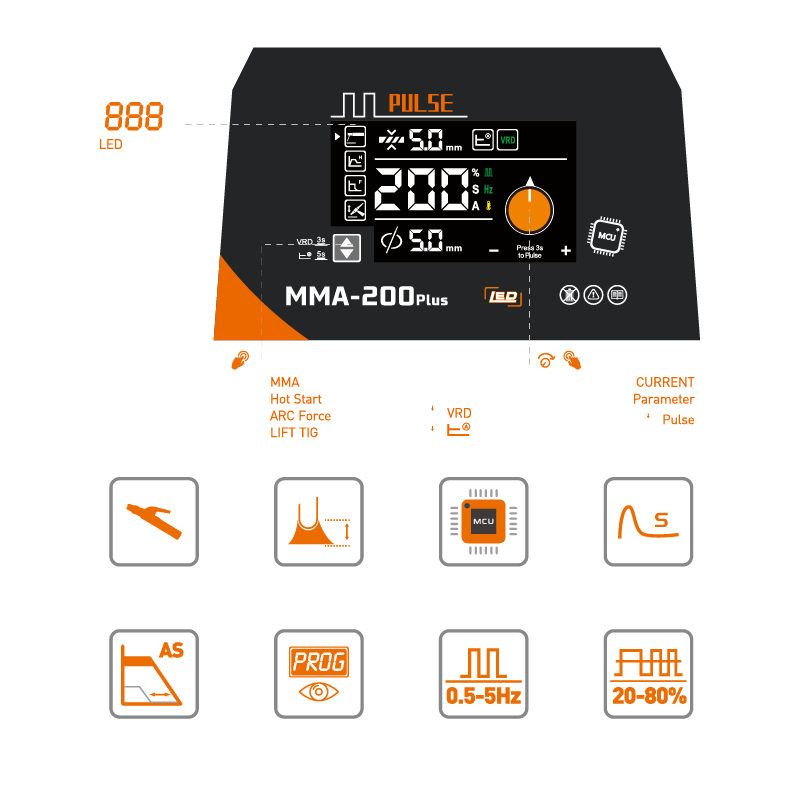
When PCB layout and control interaction are considered together in welding system design
The relationship between circuit layout and control response becomes more noticeable during continuous operation. When layout design keeps high energy paths separated from signal processing paths, control signals are less likely to be affected by switching activity.
This separation does not eliminate interaction between sections, but it reduces unnecessary overlap during operation. As a result, adjustments made by the control system are less likely to be influenced by electrical noise from power switching zones.
In longer working cycles, this kind of arrangement supports more predictable behavior, especially when operating conditions change gradually rather than suddenly.