 English
 Español

Latest News
Latest News
Latest News
Latest News
Latest News
Latest News
Latest News
Latest News
Latest News
Low wire feed speed operation is often considered simple because it involves lower material deposition and reduced heat input. However, many welders discover that an Industrial MIG Welding Machine may experience unstable arcs, irregular sounds, excessive spatter, or inconsistent bead formation during low-speed wire feeding conditions.
The reason behind this behavior is related to the narrow balance between wire melting rate, arc voltage, current response, shielding gas protection, and mechanical wire delivery. A small change in any of these areas can affect arc continuity, especially during short-circuit transfer at lower amperage ranges. Industry troubleshooting references indicate that unstable MIG arcs frequently connect with inconsistent wire delivery, contact issues, incorrect settings, or shielding problems rather than only the power source itself.
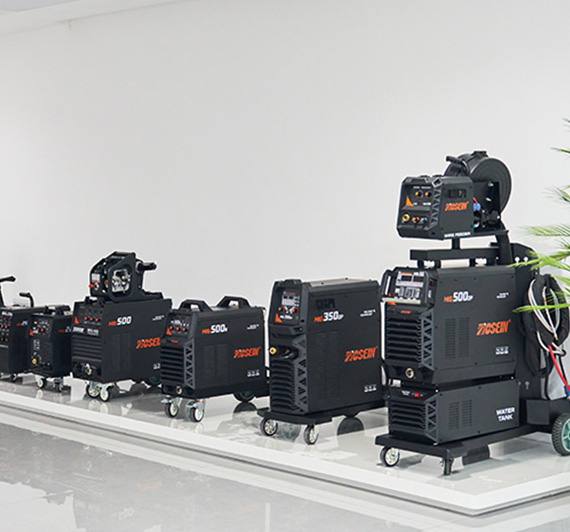
Low Wire Feed Speeds Create a Smaller Operating Window
MIG welding depends on a coordinated relationship between wire feed speed and electrical output. The wire acts as both filler material and part of the electrical circuit. At higher feed speeds, the system has more thermal energy and deposition volume, making small variations less noticeable.
Low wire feed speeds reduce this tolerance. The arc operates closer to the minimum energy level needed to melt the electrode consistently.
- Lower current output reduces the heat available for wire melting.
- Shorter arc recovery time makes interruptions more visible.
- Small feeding variations can create noticeable arc length changes.
At reduced amperage conditions, even minor differences in wire movement or electrical contact may cause popping sounds, uneven penetration, and unstable bead appearance.
Wire Feeding Accuracy Determines Arc Consistency
A common misunderstanding is that arc fluctuation always comes from the welding power source. The wire delivery system has a direct influence on arc behavior because MIG welding requires continuous and stable electrode movement.
Several mechanical factors can disturb wire movement:
- Drive roll pressure imbalance: excessive pressure may deform soft wire, while insufficient pressure may cause slipping.
- Damaged liner: contamination, wear, or bending resistance can interrupt smooth wire travel.
- Incorrect contact tip condition: worn or blocked tips may create irregular electrical transfer.
- Spool tension problems: unstable spool rotation can create temporary feed speed changes.
Technical troubleshooting guides commonly identify liners, contact tips, drive rolls, and wire path resistance as important causes of MIG wire feed fluctuation.
Voltage and Wire Speed Balance Controls Arc Behavior
MIG welding does not operate through wire speed adjustment alone. Voltage controls arc length, while wire feed speed influences current demand and deposition rate.
A mismatch between these two parameters may produce unstable welding conditions.
- Wire speed too low with excessive voltage: creates a longer arc that may feel weak or inconsistent.
- Wire speed too high with insufficient voltage: causes the wire to approach the weld pool before melting completely.
- Incorrect inductance settings: may affect short-circuit transfer smoothness.
Professional MIG systems are designed around a balance between wire feed speed, voltage, and travel speed because these variables jointly determine arc energy and weld formation.
Why Contact Quality Becomes More Important at Lower Settings
Electrical resistance has a greater influence during low-energy welding conditions. A stable arc requires reliable current transfer from the machine, through the gun components, into the wire, and finally across the arc gap.
Common contact-related problems include:
- Loose contact tips that interrupt current transfer.
- Dirty work clamps that increase return circuit resistance.
- Poor cable connections that reduce output stability.
Higher current applications can sometimes overcome small resistance changes, but low wire feed applications have less energy reserve, making these issues easier to notice.
Shielding Gas Flow Can Trigger Arc Instability
Gas protection is another factor affecting MIG arc performance. A stable arc requires a controlled atmosphere around the molten pool and electrode tip.
Problems may appear due to:
- Incorrect gas flow rate causing insufficient protection.
- Blocked nozzles reducing gas coverage.
- Air drafts disturbing shielding effectiveness.
Gas-related instability can create porosity, irregular arcs, and inconsistent weld appearance even with correctly adjusted machine parameters.
How Modern Industrial MIG Systems Handle Low-Speed Welding
Advanced inverter-based MIG equipment uses electronic feedback systems to improve low-current performance. These systems monitor output changes and adjust parameters rapidly to maintain a stable arc.
Typical technologies include:
- Digital current monitoring for faster response.
- Adaptive wire control to reduce feeding variation.
- Arc force and inductance adjustment to optimize short-circuit behavior.
- Synergic control modes that automatically coordinate voltage and wire speed.
These features help operators maintain smoother welding results across different material thicknesses and wire diameters.
Typical Parameters Affecting Low-Speed MIG Performance
- Wire diameter: 0.6mm, 0.8mm, 1.0mm, and 1.2mm options require different current ranges.
- Welding current: approximately 30A–150A applications are more sensitive to setup changes.
- Arc voltage: commonly adjusted around 14V–24V depending on transfer mode.
- Stick-out distance: excessive extension changes resistance heating and arc response.
Low-Speed MIG Performance Depends on System Balance
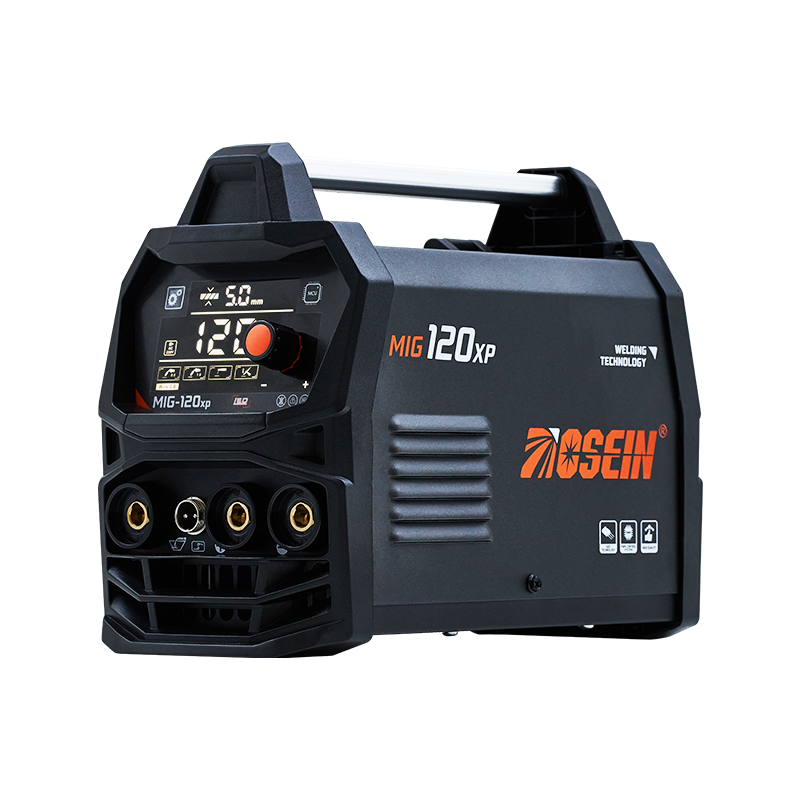
Arc fluctuation during low wire feed operation is rarely caused by a single component. The performance of an Industrial MIG Welding Machine depends on the interaction between electronic control, mechanical wire delivery, electrical connections, and welding parameters.
Low-speed welding exposes small inconsistencies because the process has less thermal and electrical margin. Proper coordination between wire feed accuracy, voltage adjustment, consumable condition, and shielding protection allows the machine to maintain a smoother arc and more consistent weld quality across different applications.