 English
 Español

Latest News
Latest News
Latest News
Latest News
Latest News
Latest News
Latest News
Latest News
Latest News
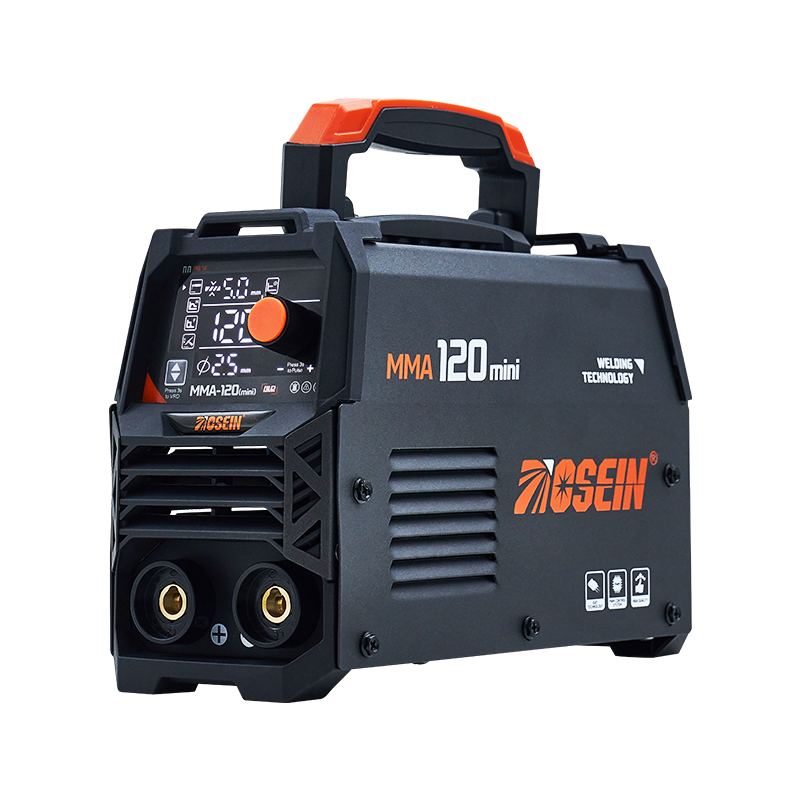
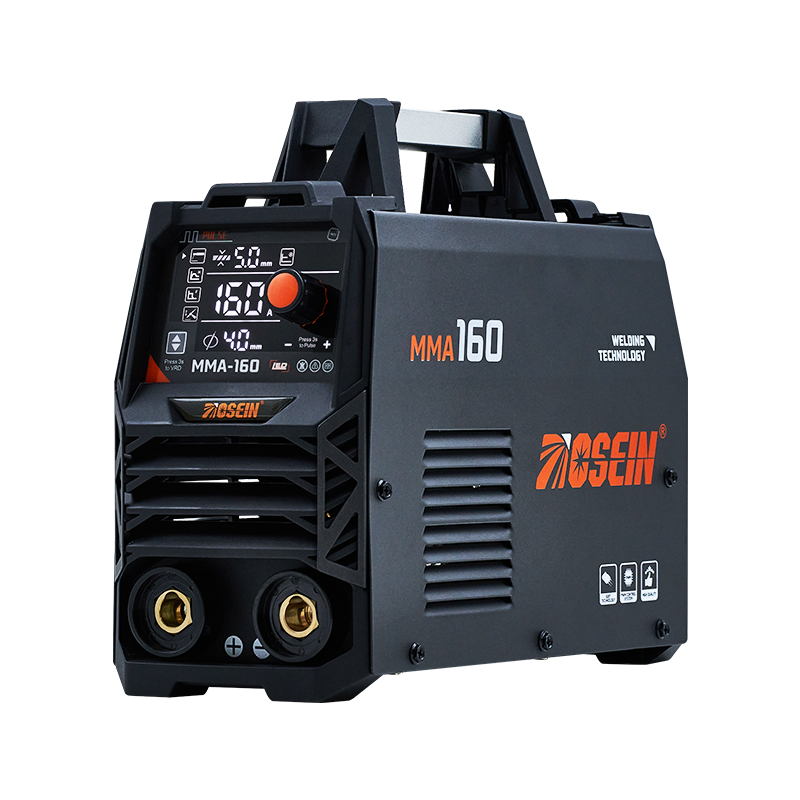
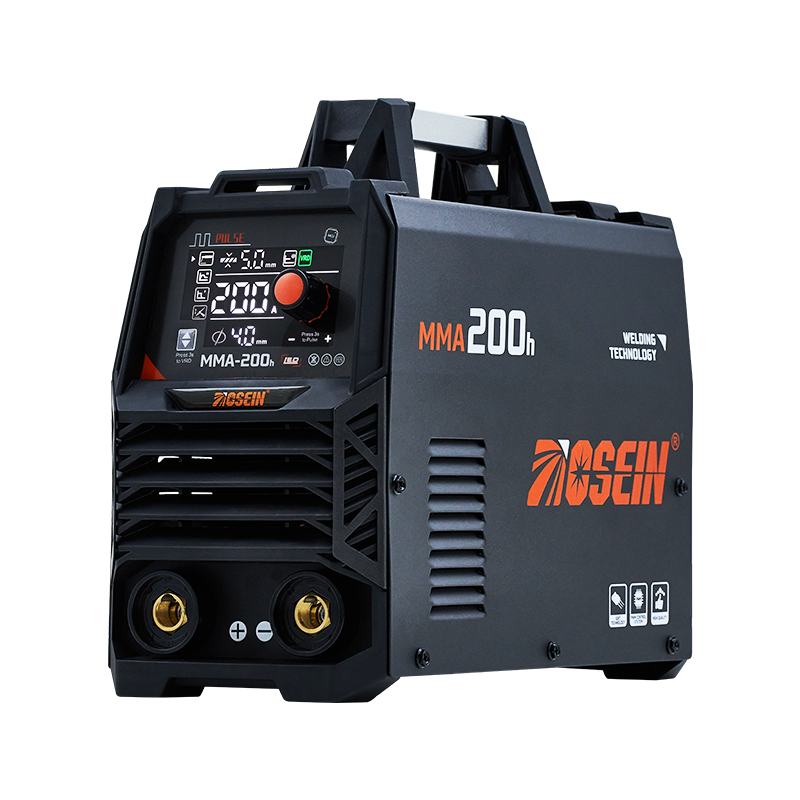
Digital readouts on modern arc welding equipment often create an impression of absolute precision. A value such as “120A” displayed on a panel suggests a live measurement of electrical current flowing through the welding circuit. Reality is more nuanced. Many systems labeled as Digital Display ARC Welding Machine rely on a combination of sensor feedback, internal calculation models, and control-loop estimation rather than a pure direct measurement of arc current at the electrode.
Understanding how these readings are generated matters because welding quality, arc stability, and repeatability depend on how closely the displayed values reflect actual arc conditions rather than internal approximations.
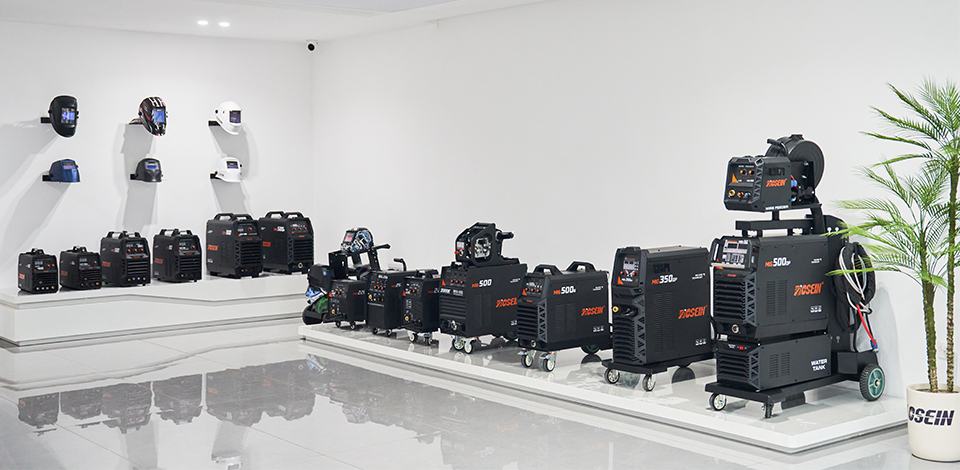
Digital Display Logic Inside Arc Welding Systems
Modern inverter-based welding machines integrate MCU or DSP control boards that continuously regulate output. Instead of showing raw electrical signals only, the display typically reflects processed data.
- Closed-loop current control uses shunt resistors or Hall-effect sensors to sample output current.
- Signal filtering smooths rapidly changing arc fluctuations into readable values.
- Sampling averaging converts high-frequency pulses into RMS or mean current indicators.
- Firmware estimation adjusts readings based on duty cycle, arc state, and load feedback.
Technical documentation for inverter welders confirms that MCU-based systems continuously monitor machine status and welding parameters in real time, presenting stabilized values on digital panels rather than raw instantaneous spikes.
Real-Time Measurement vs Displayed Stability
Arc welding current is inherently unstable at the microsecond level. The arc length constantly fluctuates due to electrode burn-off, material transfer, and thermal ionization changes. Because of this behavior, a display showing every fluctuation would be unreadable.
Instead, systems typically present:
- RMS current value (effective heating power equivalent)
- Averaged current over short sampling windows (often 0.5–2 seconds)
- Controlled output target current rather than raw arc feedback
This means the number shown is technically “real-time” in a control sense, but not instantaneous physics-level current at the arc gap.
How Measurement Hardware Impacts Accuracy
True current measurement depends heavily on sensor placement and type. Industrial welding standards describe that current can be measured using Hall-effect probes or toroidal coils placed around welding leads, while voltage must be measured close to the arc region to reduce distortion effects.
This introduces a key distinction:
- Internal sensors → fast response, machine-protected, sometimes calibrated estimations
- External meters → higher accuracy, slower integration, used for certification and QA
Because many compact inverter welders prioritize portability and cost control, internal measurement systems are often optimized for control stability rather than metrology-grade precision.
Pulse Inverter Behavior and Display Interpretation
Pulse-based welding systems further complicate interpretation. In processes like MIG pulse or TIG pulse, current is intentionally switched between peak and base levels multiple times per second.
The display cannot realistically show every pulse event, so it instead presents:
- Peak current (Ip)
- Base current (Ib)
- Programmed average current
What the operator sees is a processed representation of waveform behavior rather than a continuous oscillating signal. This explains why two machines with identical displayed values can still behave differently at the arc zone.
Arc Stability and Feedback Loop Influence
Arc stability systems continuously adjust output voltage and current to maintain a consistent weld pool. This feedback loop reacts faster than human perception, often correcting arc length changes in milliseconds.
Recent studies on arc stability modeling show that current signals are treated as dynamic waveforms influenced by plasma behavior and filtered into structured parameters for real-time classification and control systems.
This reinforces a key point: displayed values are part of a control ecosystem rather than a direct window into raw electrical chaos.
Typical Technical Ranges in Digital ARC Machines
To understand how manufacturers structure display logic, consider typical inverter MMA machine specifications:
- Current range: 10A–200A depending on model class
- No-load voltage: often 60V–80V open circuit
- Duty cycle: 30%–100% depending on load current
- Switching frequency: 20kHz–100kHz in IGBT inverter designs
At these switching speeds, real arc current changes too rapidly for raw display, reinforcing the need for averaged or modeled outputs.
Why Display Values Can Differ from External Measurement
Operators sometimes notice a mismatch between panel readings and clamp meter results. This gap is not necessarily a fault.
- Measurement location differences (cable vs arc point)
- Filtering delays in display update cycles
- Sensor calibration drift over time and temperature
- Waveform distortion caused by arc instability
Even advanced monitoring systems used in industrial welding quality control acknowledge that mean values over short intervals are often used rather than instantaneous readings for documentation and heat input calculation.
What the Display Is Really Telling You
Digital readouts on arc welding equipment are best interpreted as stabilized representations of electrical behavior rather than direct real-time snapshots of arc physics. A Digital Display ARC Welding Machine integrates sensing, filtering, and control logic to present usable information for operation, not raw chaos from the plasma arc.
Understanding this distinction helps explain why welding performance can remain consistent even though displayed numbers appear simplified or slightly “smoothed.” The display is less a measurement tool and more a translation layer between high-frequency electrical dynamics and human-readable control data.